Employee Value Proposition (EVP) is a term used to denote the balance of the rewards and benefits that are received by an employee in return for their performance at the workplace. It is a key concept in Employer Branding however should not be confused to be one and the same. Employer Branding is the personality of the organisation.
Minchington (2005) defines an EVP as a set of associations and offerings that characterizes an employer or position and differentiates it from its competitors. An EVP must be unique, relevant and compelling if it is to act as a key driver of talent attraction, engagement and retention.
Other key factors influencing how an individual may choose to balance his or her career path in an organisation are;
Compensation - salary, incentives, cash recognition, pay process
Benefits – healthcare, retirement, insurances,recognition programs
Affiliation – work environment, trust, transparency, organizational commitment
Career – advancement opportunities, personal growth and development, training, job security
Work Content – challenge, autonomy, meaningfulness, variety
Astor Levin’s 2007 EVP National Survey results showed that only 56% of respondents believe that their expectations upon joining their employer had been met.
Detailed below are some fabulous and varied examples of companies who are leading the way in developing and communicating their Employee Value Propositions both locally and globally.
Vodafone Australia- Our People promise Be your possibility, make every moment count
We make this promise to you because we want you to be free to be yourself and use all your talents, ideas and passions to the max every day, so we deliver on our customer promise, and you get to make the most of your time at Vodafone.
Welcoming you-Hit the ground running and enjoy a great start at Vodafone
Connecting you-Get in the know, stay connected and speak your mind
Developing you-Be your possibility with challenging career and development experiences
Looking out for you-Your well-being and safety come first
Celebrating you-Love your work, love to say thank you when you go above and beyond
Beyond you-Live your passion and together with Vodafone, make a difference to the world around us
Rewarding you-Make the money talk with real rewards for performance
Explore more at http://careers.vodafone.com.au/content.asp?stp=AW&newsID=101395
Sodexo- We support and encourage our employees to shape their own future and grow with the company.
We care about our employees in the same way that we care about our clients and we strive to provide each and every employee with a wide range of professional and personal opportunities to improve the quality of their daily life.
Our employees are able to develop their careers both locally and globally across all of our service areas. They have the flexibility to align the pace of their career with their various life stages.
By living the Sodexo values and ethical principles, and actively fostering diversity and inclusion, our people make Sodexo a company of the future.
Five commitments capture the Sodexo Employee Value Proposition: Recruiting, Welcoming, Living, Growing and Rewarding.
Explore more at http://www.iamsodexo.com/front_en/about/EVP/EVP.asp
Coca Cola Europe- We are a great place to work where people are inspired to be the best they can be.
What do we offer:
· The Coca-Cola Company’s extraordinary heritage, our leading brands and the global scale of what we do;
· The challenge of meaningful work – our unique global system offers constant opportunities to develop world-class skills and a truly international career;
· A unique culture where people convert their passion into action;
· The kind of competitive compensation you would expect from a world leader.
What do we expect from you:
· The ability to contribute, to make a difference and have a tangible impact – turning your passion into action;
· Creative and fresh thinking in your work and your life, regardless of your role;
· A spirit of collaboration – you thrive when you work with a diverse range of people with different views, perspectives and priorities;
· A pragmatic and commercial mindset that understands the challenge of sustainability.
Explore more at http://www.europeancareers.coca-cola.com/en/home/why-coca-cola.aspx
Sunday, August 9, 2009
Saturday, August 8, 2009
Friday, August 7, 2009
What are your 10 out of 10's?
 How do you stay connected with who you are and keep perspective on the world we live in. It is easy to get wrapped up in problems at work with people or projects that can be magnified to an unbelievable extent. Of course weeks later when the dust settles and you have moved on to another drama, perspective places old issues in the who cares pile, almost laughable at how much head space and stress they derived.
So what is Dr Fred Grosses's 10/10 all about?
Simply....it's anything that puts a smile on your face.

But there is 1 rule. It must be possible to achieve every
single day. So racing formula 1 cars at the Grand Prix does
not qualify, as (for most) it is not achievable every day.
My list of 10/10's are things like....
- Seeing the sun coming up over Sydney Harbour in the morning
- Taking 5 min in a steaming hot shower
- Seeing my twin niece todlers laugh and smile
- Hearing my friend's voice in London over the phone
- Feeling the sand between my feet
- Hearing the sound of the ocean
- The feeling of sweat drenched clothes after a great work out
- Belting out a favourite tune in the car as I cruise around town with the wind blowing in my hair...
And I could go on!
Spend 5 minutes or so to come up with your list of 10/10's. What are the simple things in life that put a smile on your face. Keep a mental note of what makes you smile each day.....and create a list! Then make sure you fit 2 or 3 into every day as a reminder of how easy it is to feel good. Plus it is impossible to be angry, sad or stressed when you have a smile on your face!
"The difference is between those who are content to do what they've always done, and the pacesetters who grow by doing what they've never done!" Fred GrosseAbout .......Dr Grosse is a business psychotherapist, corporate consultant and systems designer, personal coach, mentor and trainer, now in his 30th year of sharing his business techniques. Deceptively simple, Dr Grosse's technique is about the most effective use of time, on a consistent basis. Read more at http://www.drfredgrosse.com/about/index.html
Friday, July 31, 2009
Wednesday, July 29, 2009
Recognition as the Fuel.....Sustain Culture, Drive Innovation and Reward the Right Behaviours
 All parents teach their children from a very early age to say thank-you as a basic courtesy or acknowledgement of appreciation. As a widely accepted human behaviour, it is interesting that simple recognition or the process of actually saying thank-you does not play a larger role within the workplace. When was the last time you said thank-you to a colleague?
An incredibly cost effective yet underutilised reward initiative is a systematic and formal recognition program. A study on the link between recognition and performance revealed 77.6% of employees stated it was ‘very or extremely important to be recognised by managers when they do good work’.
Recognition programs must be publicly announced (company or function wide) and be consistent and systematic to encourage the desired behaviour. They can be used to focus performance within areas of the business which could include;
· living corporate values
· customer service excellence
· process and product innovation
· corporate social responsibility
The difficult thing about managing a culture within an organisation is the number of variables that contribute to its existence. Some people will be driven to achieve or perform because there are financial rewards on offer. Others will simply want to do a good job because people within the team are depending on them. Leverage comes when you can develop reward initiatives that appeal to many different aspects of human motivation.
Why does recognition motivate so many people?
Competence - the desire to do a job & do it well. Here the drive to perform is the individual’s own standards or expectations of performance. Recognition demonstrates the organisations value for this level of competence.
Reputation – the desire to be known publicly and be liked. To be known amongst the business or within the industry as good at what you do. Recognition contributes to the development of reputation.
Contribution - to connect with and be part of a bigger vision, for your skills to be used. Recognition highlights the value individuals play in achieving this broader vision.
Competition - desire to achieve and win. This type of individual is motivated not by the end goal but by being the best, over and above the standards other colleagues set. Recognition acknowledges the winner.
Whilst the above drivers do not operate in isolation, most people are motivated by one primary driver. What is common regardless of why recognition motivates, is that it feels good to be recognised and ultimately this type of reward will inspire repeated performance.
Sunday, July 19, 2009
July 24 Lifeline's National Stress Down Day
 Wear your slippers to work or organise a bake off to support Lifeline's National Stress Down Day on July 24.
Other ideas to bring Stress Down Day to life include:
- Launch a 3 week education program that creates awareness and communicates self management strategies ,read more below,
- Develop a game show style quiz to facilitate education of your staff; or
- Create a stress safe-zone, where staff can retreat to implement some stress soothers.
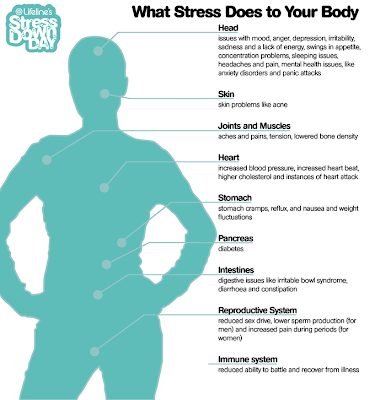
Raising awareness about how stress impacts the body and communicating strategies of how your employees manage it's impact can be a great way of supporting the health and wellbeing of your people.
Lifeline's National Stress Down Day aims to promote the emotional well being for all Australians. Funds raised will support Lifeline's 24 hour telephone counselling support service.
To Register your support visit http://www.stressdown.org.au/
Also check out the fantastic Toolkit online http://www.stressdown.org.au/managing_stress for Overcoming Stress. Distribute a copy to your staff to promote awareness or chunk it down to a 3 week education program that covers off:
1) What is stress and What does it do to my body
2) What are the signs of stress
3) Managing stress in my life
Simple tips for coping with stress from Lifeline...
-Talk to someone you trust and share your feelings
-Take time to look after yourself physically with exercise, a balanced diet and health checks
-Allocate time for thing you enjoy and that make you happy
-Don’t place unnecessary pressure or expectations on yourself
-Make time for friends and family amid other priorities
-Limit alcohol intake and use of other substances
-If you feel your stress levels peaking take a few minutes of time out
-Practice relaxation techniques
-Plan ahead to manage situations that you know are going to be stressful
-“Opt in” to positive activities, rather than “opting out” or avoiding life’s challenges.
Monday, July 13, 2009
The Hidden Cost of Improved Retention.... Low Turnover of Low performers
 With unemployment in Australia at its highest since October 2003, organisations could be forgiven for thinking that Employee Retention is off the strategic agenda. A far cry from the talent crisis 18 months ago, high staff turnover facilitated unengaged and unproductive employees (and their employers) the opportunity to leave, decreasing overall retention but increasing employee engagement as old employees are replaced with enthusiasm and energy.
Whilst a slowdown in employee turnover, as being seen in the current environment, would be favourable in terms of KPI’s and subsequent cost to business, the hidden cost of higher staff retention is realised with a decrease in the rate at which unengaged staff are rotating out of the business. As these types of employees have fewer opportunities to move on, the level of employee engagement is subjected to increased pressure. How much are these delayed departures costing your business?
This tight labour market will not last forever and when the market starts to loosen, there will be 3 different types of candidates:
· Employees who had already made a decision to leave prior to the job shortage and have been trapped in your organisation since the market tightened,
· Employees who were forced into the job market via desperation or redundancy and have accepted any role in order to secure employment; and
· Employees who have made a decision to leave over the past 12 months and are waiting untill the market picks up to make their next career move.
The result- all three types of employees have disconnected from the business and checked out, at least in some capacity, emotionally as they hang out in the departure lounge waiting for the weather to clear for flight clearance. How many seats are taken in your departure lounge?
Actively monitoring employee engagement and managing those low performers will minimise the cost to your business in the short term and facilitate planning for the future. It will also help you identify and secure those high performers who may be vulnerable to an alluring market place. It is retention of the right people that counts!
Subscribe to:
Posts (Atom)
