Find more at 100 Incredibly Inspiring Videos for Leaders
Friday, July 31, 2009
Wednesday, July 29, 2009
Recognition as the Fuel.....Sustain Culture, Drive Innovation and Reward the Right Behaviours
 All parents teach their children from a very early age to say thank-you as a basic courtesy or acknowledgement of appreciation. As a widely accepted human behaviour, it is interesting that simple recognition or the process of actually saying thank-you does not play a larger role within the workplace. When was the last time you said thank-you to a colleague?
An incredibly cost effective yet underutilised reward initiative is a systematic and formal recognition program. A study on the link between recognition and performance revealed 77.6% of employees stated it was ‘very or extremely important to be recognised by managers when they do good work’.
Recognition programs must be publicly announced (company or function wide) and be consistent and systematic to encourage the desired behaviour. They can be used to focus performance within areas of the business which could include;
· living corporate values
· customer service excellence
· process and product innovation
· corporate social responsibility
The difficult thing about managing a culture within an organisation is the number of variables that contribute to its existence. Some people will be driven to achieve or perform because there are financial rewards on offer. Others will simply want to do a good job because people within the team are depending on them. Leverage comes when you can develop reward initiatives that appeal to many different aspects of human motivation.
Why does recognition motivate so many people?
Competence - the desire to do a job & do it well. Here the drive to perform is the individual’s own standards or expectations of performance. Recognition demonstrates the organisations value for this level of competence.
Reputation – the desire to be known publicly and be liked. To be known amongst the business or within the industry as good at what you do. Recognition contributes to the development of reputation.
Contribution - to connect with and be part of a bigger vision, for your skills to be used. Recognition highlights the value individuals play in achieving this broader vision.
Competition - desire to achieve and win. This type of individual is motivated not by the end goal but by being the best, over and above the standards other colleagues set. Recognition acknowledges the winner.
Whilst the above drivers do not operate in isolation, most people are motivated by one primary driver. What is common regardless of why recognition motivates, is that it feels good to be recognised and ultimately this type of reward will inspire repeated performance.
Sunday, July 19, 2009
July 24 Lifeline's National Stress Down Day
 Wear your slippers to work or organise a bake off to support Lifeline's National Stress Down Day on July 24.
Other ideas to bring Stress Down Day to life include:
- Launch a 3 week education program that creates awareness and communicates self management strategies ,read more below,
- Develop a game show style quiz to facilitate education of your staff; or
- Create a stress safe-zone, where staff can retreat to implement some stress soothers.
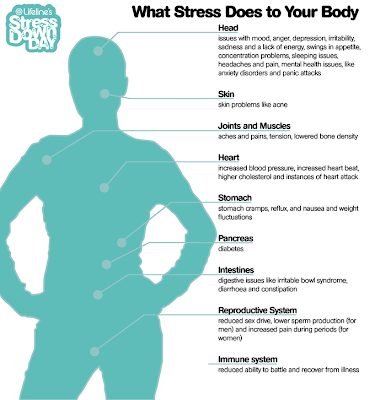
Raising awareness about how stress impacts the body and communicating strategies of how your employees manage it's impact can be a great way of supporting the health and wellbeing of your people.
Lifeline's National Stress Down Day aims to promote the emotional well being for all Australians. Funds raised will support Lifeline's 24 hour telephone counselling support service.
To Register your support visit http://www.stressdown.org.au/
Also check out the fantastic Toolkit online http://www.stressdown.org.au/managing_stress for Overcoming Stress. Distribute a copy to your staff to promote awareness or chunk it down to a 3 week education program that covers off:
1) What is stress and What does it do to my body
2) What are the signs of stress
3) Managing stress in my life
Simple tips for coping with stress from Lifeline...
-Talk to someone you trust and share your feelings
-Take time to look after yourself physically with exercise, a balanced diet and health checks
-Allocate time for thing you enjoy and that make you happy
-Don’t place unnecessary pressure or expectations on yourself
-Make time for friends and family amid other priorities
-Limit alcohol intake and use of other substances
-If you feel your stress levels peaking take a few minutes of time out
-Practice relaxation techniques
-Plan ahead to manage situations that you know are going to be stressful
-“Opt in” to positive activities, rather than “opting out” or avoiding life’s challenges.
Monday, July 13, 2009
The Hidden Cost of Improved Retention.... Low Turnover of Low performers
 With unemployment in Australia at its highest since October 2003, organisations could be forgiven for thinking that Employee Retention is off the strategic agenda. A far cry from the talent crisis 18 months ago, high staff turnover facilitated unengaged and unproductive employees (and their employers) the opportunity to leave, decreasing overall retention but increasing employee engagement as old employees are replaced with enthusiasm and energy.
Whilst a slowdown in employee turnover, as being seen in the current environment, would be favourable in terms of KPI’s and subsequent cost to business, the hidden cost of higher staff retention is realised with a decrease in the rate at which unengaged staff are rotating out of the business. As these types of employees have fewer opportunities to move on, the level of employee engagement is subjected to increased pressure. How much are these delayed departures costing your business?
This tight labour market will not last forever and when the market starts to loosen, there will be 3 different types of candidates:
· Employees who had already made a decision to leave prior to the job shortage and have been trapped in your organisation since the market tightened,
· Employees who were forced into the job market via desperation or redundancy and have accepted any role in order to secure employment; and
· Employees who have made a decision to leave over the past 12 months and are waiting untill the market picks up to make their next career move.
The result- all three types of employees have disconnected from the business and checked out, at least in some capacity, emotionally as they hang out in the departure lounge waiting for the weather to clear for flight clearance. How many seats are taken in your departure lounge?
Actively monitoring employee engagement and managing those low performers will minimise the cost to your business in the short term and facilitate planning for the future. It will also help you identify and secure those high performers who may be vulnerable to an alluring market place. It is retention of the right people that counts!
Wednesday, July 1, 2009
When Recruitment and Social Media collide.....
 For the Facebook user- relevant advertising will capture attention more frequently, increasing the likelihood of responsive action. For the business, targeted niche advertising, provides higher quality results at a lower cost!
There are some fantastic new tools that are being developed in the world of recruitment and social media that leverage both technology and the mass audience data that is now available. There is no question that the social media platform has, and continues to dramatically change the way we market both our consumer and employment brands.
Social Media allows us to connect with individuals in a targeted and personal way. Reaching the exact type of audience framed by not only who we are as individuals, but also by our web surfing profile.
Why are people embracing Social media so much? Because humans inherently want a personal and emotional connection with others... and that is what branding appeals too. If employers connect with candidates on this level at the beginning of the recruitment journey, then the success of the recruit, and subsequent employment experience can only be stronger.
Historically advertising has provided a broad outreach to a specific readership demographic, at a fixed cost. The results usually reap a spectrum of candidates which once reviewed, usually deliver a handful of candidates suitable for the interview process.
Recruitment within the social media outlets will seek direct access to the profile of candidates that are likely to fall into the interview process, allowing for tailored copy at a variable cost. The reach is narrow, but the suitability of candidates explodes...... and here is the kicker......the ability to get the attention of the Passive Job Seeker increases.
We know that a reader will pay more attention to advertising in a niche publication such as a cooking magazine, than a daily newspaper (because the chances of actually appealing to the readers needs are increased). Give me one publication whose demographic targets young, professional women, whose web activity includes online shopping for organic produce in Sydney, Gym timetables at Fitness First and hot Paris cafes......... and you got my attention!
Listen to how adidas are leveraging Social Media in their recruitment process http://www.youtube.com/watch?v=egdnOVdVsRE&feature=channel_page
Wednesday, June 24, 2009
Will they give up a 9 day Fortnight?

As the dust starts to settle on cost cuts and redundancies, I can’t help but start to think about what the world will look like when the markets come back and business begin to experience growth again.
Today the employment landscape looks different to what it did 12 or 18 months ago. The flexibility 4 day work weeks or 9 day fortnights have introduced to employees is likely to be something many will value and not want to surrender when given the opportunity. This time away from the workplace has now been replaced by personal errands or hobbies usually reserved for the weekend, time with friends or family, or even just the opportunity to slow down and live life at a relaxed pace rather than a relay. The value placed on this sort of lifestyle is likely to be far greater than any possible financial impact offered as a substitute and those who have come to expect this sort of flexibility will regard it as essential when considering future employers.
The skills shortage will absolutely return, enhanced now by those who have opened new doors to opportunity and taken on the entrepreneurial spirit of small business. Declining birth rates will continue to impact the current workforce and a continued ageing population will bring new dimensions to how and when we work. Organisations will need to think creatively about flexibility in the workplace for all generations, why not start now?
Sunday, June 21, 2009
Discover your Hidden Strengths

I recently spent a few weeks in London, Paris and NYC , all amazing cities boasting hectic lifestyles at a frenetic pace. Most of my travel to date has been with a very good friend who has a fantastic ability to read maps in seconds and have us en route to our destination immediately. Over this time I had come to decide that maps and me were not friends! My sense of direction is terrible, so much so that if I was convinced we should be heading in one direction, it was almost certain that that the opposite would be correct! Never wanting to fail and convinced I can do anything, I persisted at proving my direction prowess. After a few years (yes it took that long for me to give up) of being proved wrong I finally abdicated any responsibility for direction, deciding to leave it to the experts!
So back to London, Paris and NYC...... this time I was alone and had no choice but to navigate the maze of streets and underground transport systems. Somewhat terrified at the prospect of ending up in some nasty neighbourhood, I armed myself with 3 versions of maps for every city and to the streets I went..... and what a star!
I became a tube hopping bandit! No mistakes, no nasty neighbourhoods and no fights because I had spent 30 minutes trying to prove we are heading in the right direction till proven we weren't!
The point.... sometimes there are things that you are brilliant at and actually enjoy, but have yet to discover. It can take the right role, manager, workplace or in my case a moment of sheer necessity, to open up opportunities to explore our unlimited potential.
"Now discover your Strengths' by Marcus Buckingham is a fantastic book with an associated online questionnaire which helps to identify your own strengths and those of the people you manage. It also opened my mind to how we language the strengths of our staff in the workplace. Try brainstorming 20 different words you would identify as a strength. Then try weaknesses or development points.
The StrengthsFinder provides 34 different themed strengths to help articulate your strengths which incidentally they define as 'consistent near perfect performance in an activity'.
Most organisations need to maximise internal resources, particularly with recent staff cuts and market pressures. Open up a conversation with your staff to identify and language their strengths. Not only will this create power within each individual but open up possible synergies within teams and functions, the ultimate in leveraging. I am sure that you will find pockets of gold everywhere, perhaps a creative genius in the finance department!
People love to do what they are good at! It gets more energy, focus, accuracy, creativity and ultimately success! And this type of momentum is infectious.
Subscribe to:
Posts (Atom)
